


The United States Coast Guard saw big results in 2025, highlighted by a record-high number of narcotics-related seizures.
USCG forces operating in the Eastern Pacific and Caribbean last year achieved the largest annual maritime drug interdiction results in service history, seizing more than 511,000 pounds of narcotics valued at more than $3.8 billion. Officials said the seizures prevented more than 193 million potentially lethal doses from reaching the U.S., adding that counter-drug and law enforcement operations saved American taxpayers over $10 billion in avoided costs—including over $2.3 billion in health care costs just from cocaine interdictions.
A USCG spokesperson told Military.com that the service’s average annual seizure weight prior to 2025 was 167,000 pounds, with one kilo of cocaine worth $16,588.
“The men and women of the Coast Guard delivered extraordinary results for our Nation in 2025,” said Adm. Kevin E. Lunday, acting commandant, in a statement on Friday. “From securing the border and interdicting illegal drugs to facilitating maritime commerce and responding rapidly to crises, their success is driving the momentum we carry into 2026.”
Cocaine Interdictions
USCG officials credit different operations and vessels that resulted in a record-setting year of maritime accomplishments.
One operation, called Operation Pacific Viper, launched in August 2025 and sent U.S. forces to the Eastern Pacific to stop cartels and criminal organizations by interdicting drugs and illegal aliens before reaching domestic shores. The operation maintained pressure on criminal subjects by integrating cutters, aircraft, unmanned systems and specialized forces in various maritime zones.

In about a two-month span, Operation Pacific Viper had successfully resulted in the seizure of more than 100,000 pounds of cocaine—an average of more than 1,600 pounds interdicted daily. The seizures led to U.S. apprehension of 86 individuals suspected of narco-trafficking behaviors.
Rear Adm. Jeffrey Novak, deputy commander of U.S. Coast Guard Pacific Area, said in October that the seizures in that region marked a “remarkable achievement."
Also in August, the Coast Guard’s Helicopter Interdiction Tactical Squadron, known as HITRON, conducted its 1,000th counter-narcotics interdiction. The mission led to the successful use of airborne force to disable a narco-smuggling vessel in the Eastern Pacific Ocean, adding to the more than $2.1 billion in illicit drugs interdicted in the Eastern Pacific and Caribbean by HITRON last year.
Immigration Patrol and Other Feats
Along with the copious amounts of drugs interdicted in various waterways, USCG also touted deterring and/or transporting more than 11,000 illegal aliens across the over 100,000 miles of U.S. border patrolled by the service.
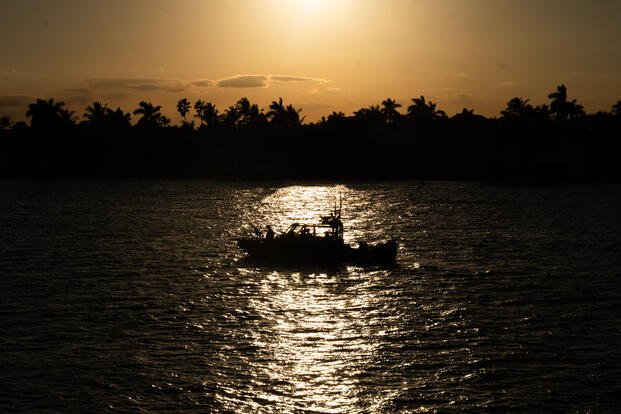
A specific mission launched in March 2025 and called Operation Border Trident, meant to combat transnational terrorist and criminal organizations and illegal alien activity in the California Coastal Region. Officials said the operation “surged assets, including Fast Response Cutters, National Security Cutters, aircraft, and unmanned systems to curb the flow of illegal maritime migration.”
Interdictions in the region increased 44% over 2024 levels, according to the service.
Among the other aspects touted from its 2025 performance were the service’s highest recruiting increases since 1991, aid provided during flash flooding events in different pockets of the country, saving 5,220 lives, assisting 19,437 people, and saving or assisting more than $1.02 billion in property.





