


The Marine Corps is equipping its infantry squads with a new precision strike tool that promises to change how small units engage threats in contested environments. Anduril Industries recently secured a $23.9 million contract to deliver more than 600 Bolt-M loitering munitions systems, starting in February, under the Organic Precision Fires-Light program (or "OPF-L").
This move puts long-range, man-packable drones directly into the hands of rifle squads, enhancing their ability to strike beyond line of sight without relying on larger support assets.
The Bolt-M, a vertical takeoff and landing quadcopter, weighs between 13 and 15 pounds; it offers a range exceeding 20 kilometers and an endurance of about 40 minutes.
Designed for quick setup in restricted terrain, it integrates with Anduril's Lattice software for mission planning, target acquisition and engagement. Infantry Marines can launch it from covered positions to scout and strike enemy assets, such as anti-tank teams, command posts or air defense sensors.
This development aligns with the Corps' push for distributed operations, where squads operate more independently in high-threat areas. By providing organic fires at the lowest levels, the Bolt-M reduces exposure for Marines and speeds up decision-making in environments where air superiority might be challenged.
What the Bolt-M Brings to the Fight
The system stands out for its portability and ease of use. A small team can carry multiple rounds along with a compact ground control station, ensuring it doesn't disrupt patrol balances. Once airborne, the drone builds a detailed picture of enemy activity before delivering a precise payload.
Testing has validated its performance. Since its introduction in October 2024, the Marine Corps evaluated over 250 systems through safety, environmental and operational trials.
It flew hundreds of times against various targets, proving reliable in representative conditions. Production capacity will ramp up with Anduril's dedicated line, which is capable of over 100 units per month, keeping unit costs in the low tens of thousands of dollars.
This efficiency reflects a smart use of taxpayer funds, focusing on scalable tech that boosts lethality without unnecessary overhead. Unlike bulkier systems, the Bolt-M empowers squads to handle route clearance, overwatch and suppression tasks on their own, limiting the need for artillery or air support in ammo-constrained scenarios.

Fitting into Force Design 2030
The rollout supports the Marine Corps' Force Design 2030, which emphasizes dispersed, survivable formations for littoral and archipelagic fights. As detailed in a recent update on the plan, organic precision fires like these are key to modernizing infantry battalions for peer conflicts.
Squads gain tools to close kill chains quickly, adapting to lessons from recent (and ongoing) wars where small drones have neutralized armored vehicles and logistics nodes. In urban or island settings, the Bolt-M allows Marines to navigate obstacles like ridgelines or water gaps, maintaining an edge in joint all-domain operations.
Critics of earlier Force Design changes worried about reducing traditional capabilities, but additions like this show the Corps is enhancing, not diminishing, grunt-level power. For more on the evolution, see our coverage of the Marine Corps Force Design Update: What Every Marine Needs to Know.
Delivery Timeline and Unit Integration
Deliveries begin next month, with systems and support equipment arriving through April 2027. First operational units get the gear this summer, marking a rapid fielding that represents the program's importance.
Infantry rifle squads and platoons will integrate the Bolt-M as standard kit, with training focusing on its automated navigation and human-in-the-loop controls. This ensures ethical engagement while maximizing speed. The contract falls under a larger $249 million ceiling for the Organic Precision Fires-Light effort, allowing for vendor diversity and adjustments based on feedback.
Marines in the fleet have already experimented with similar concepts, as seen in efforts to insert unmanned systems into basic units.
Check out how the Corps is settling on 13-grunt squads with drone specialists in this piece: Top Marine Says Service Has Finally Settled on 13-Grunt Rifle Squads.
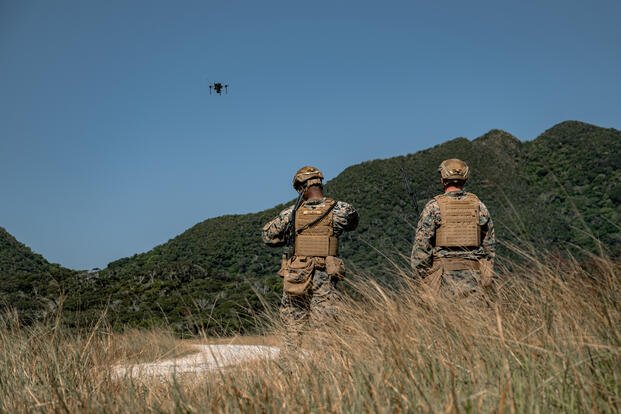
Implications for Indo-Pacific Operations
In the Indo-Pacific, where the threat of great-power competition looms ever-present, the Bolt-M strengthens Marine littoral regiments' stand-in forces. Dispersed units can generate effects from austere bases, deterring aggression without large platforms.
This capability addresses gaps in contested logistics, where artillery might be limited.
It also draws from global conflicts, highlighting how loitering munitions shift advantages to agile forces. Edge cases, like operations in dense urban areas or against electronic warfare, benefit from the system's automation and low signature.
Fiscally, it promotes responsibility by leveraging commercial innovation for defense needs, avoiding bloated programs. As the Corps refines this, it could influence allied forces, fostering interoperability in joint exercises.
For context on related tech, read about Marines Revolutionize Readiness at Innovation Campus, where similar innovations are encouraged.
Overall, the Bolt-M rollout marks a timely step toward a more lethal, self-reliant Marine infantry, ready for tomorrow's battles.





