


A U.S. Air Force tanker went down during a combat mission in Iraq, killing all six airmen aboard, military officials said Friday.
U.S. Central Command said the KC-135 Stratotanker crashed in western Iraq on March 12 during operations tied to the conflict with Iran. Initial reports indicated four crew members had died, but officials later confirmed that all six personnel aboard the aircraft were killed.
The aircraft was flying a combat mission within U.S. Central Command’s area of responsibility when it went down. Officials said the crash occurred in friendly airspace, and early assessments indicate there is no evidence of hostile fire or friendly fire.
Military.com reached out to U.S. Central Command, Air Forces Central, Air Mobility Command, and the Pentagon for comment.
Officials have not released the names of the six airmen as the military continues next-of-kin notifications.

Deadly Tanker Crash Happened During Combat Mission
Senior military leaders acknowledged the loss Friday as U.S. operations tied to the conflict with Iran continue across the region.
“Please keep these brave airmen, their families, friends and units in your thoughts in the coming hours and days,” Gen. Dan Caine, chairman of the Joint Chiefs of Staff, said during a Pentagon briefing Friday in Washington.
Officials said the aircraft was operating within U.S. Central Command’s area of responsibility, the combatant command responsible for U.S. military operations across the Middle East, Central Asia and parts of North Africa.
Caine said early assessments show no indication that the aircraft was shot down.
Officials have not released the aircraft’s tail number, assigned unit or launch location.
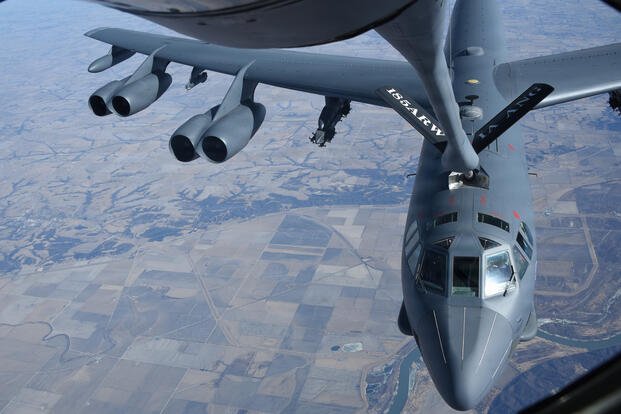
The KC-135 Stratotanker is one of the Air Force’s primary aerial refueling aircraft, allowing fighters, bombers and surveillance aircraft to remain airborne for extended periods during long-range missions.
Aerial refueling has become especially important during the current Iran conflict, where aircraft operate across a vast region stretching from the Persian Gulf to Iraq and Syria. A recent U.S. campaign has targeted hundreds of Iranian military sites and infrastructure in an effort to degrade Tehran’s ability to threaten U.S. forces and regional allies. The operation struck nearly 200 targets in a matter of days as part of Operation Epic Fury, illustrating the scale of the air campaign.
Tanker aircraft allow strike fighters and surveillance platforms to remain on station far longer than they could on internal fuel alone, extending the reach and duration of combat missions.

US Aircraft Losses Grow in Iran War
The tanker crash marks the fourth reported U.S. aircraft loss since the conflict with Iran escalated in recent weeks.
Earlier in the conflict, U.S. service members were killed during attacks tied to Operation Epic Fury, highlighting the risks facing American forces operating across the region. That attack killed multiple U.S. troops and wounded several others, marking one of the first deadly incidents involving American forces after the campaign began.
During the same Pentagon briefing Friday, Defense Secretary Pete Hegseth said U.S. operations targeting Iran’s military infrastructure have significantly reduced Tehran’s ability to launch attacks.
“Iranian missile launches are down about 90%, and drone attacks have dropped roughly 95%,” Hegseth told reporters during the briefing.
Despite those gains, U.S. forces continue operating across a wide region where aircraft conduct strike missions, patrols and surveillance operations tied to the conflict.
Aerial refueling aircraft such as the KC-135 remain critical to sustaining those operations, enabling fighters, bombers and intelligence aircraft to stay airborne longer and operate farther from their home bases.

Militia Claims Tanker Crash in Iraq
An Iran-aligned militia group operating in Iraq claimed responsibility for the crash shortly after the incident.
The group said it targeted the aircraft as part of its campaign against U.S. forces in the region, though it did not provide evidence supporting the claim.
U.S. military officials said there is currently no indication that hostile fire caused the crash.
Iran-backed militias in Iraq have repeatedly targeted U.S. forces with rockets, drones and other attacks since the conflict escalated.
The broader war has also expanded beyond Iraq. Iranian missile strikes have targeted regional U.S. facilities and military positions, including attacks near major American bases in Bahrain and other locations tied to U.S. naval operations in the Persian Gulf. The attack underscored the regional scope of the conflict and the growing number of flashpoints involving U.S. forces.
Officials said investigators have not ruled out mechanical failure or another operational issue as a possible cause of the crash.
The exact circumstances surrounding the incident remain under investigation.
Cause of Deadly Tanker Crash Still Unknown
Several key questions remain unresolved as investigators begin reviewing the crash. Officials have not released the identities of the six airmen killed as the military completes next-of-kin notifications.
The Air Force has not confirmed the aircraft’s assigned unit, tail number, or the base from which the KC-135 launched.
Officials also have not said whether an official Accident Investigation Board has been convened. Such investigations typically examine flight data, maintenance records, weather conditions and communications to determine the cause of an aircraft loss.
Investigators also have not confirmed whether the aircraft was conducting aerial refueling operations at the time of the incident.
More details are expected as the investigation continues and military officials release additional information about the aircraft and crew.





