


He served in the U.S. military, wore the uniform and followed orders. Years later, he faced a reality many Americans don’t realize is possible: being forced to leave the country he once served.
The issue drew new attention after a recent case involving a Florida Marine veteran who left the United States following a prolonged citizenship battle. But that case is not unique—and it has raised a broader question: Does serving in the U.S. military guarantee citizenship?
The answer, according to immigration attorneys and veterans’ advocates, is no. And in a number of recent cases, veterans have found themselves navigating a complex legal system where military service alone is not enough to secure their place in the country.
Today, more than 40,000 noncitizens serve in the U.S. military, and an estimated 115,000 noncitizen veterans live in the United States, according to congressional research and defense personnel data cited by military policy analysts. Those figures underscore how many service members could be affected when gaps in the system emerge.

Military Service and Citizenship: Not Automatic
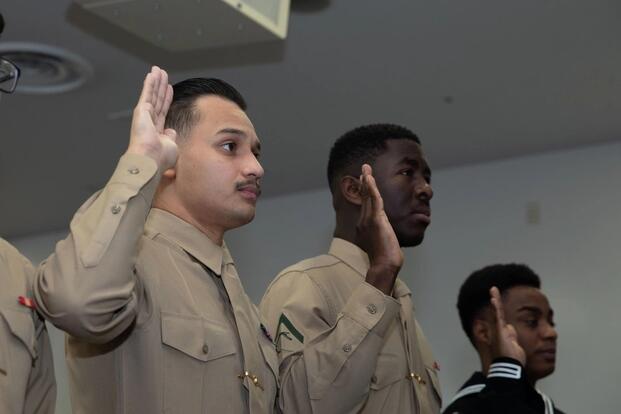
For generations, immigrants have served in the U.S. military, often with the understanding that their service could help them become American citizens.
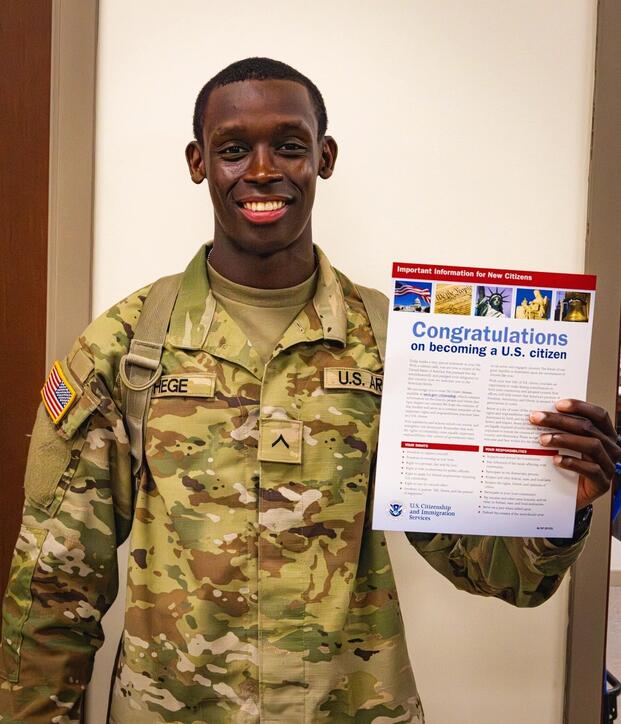
Federal law allows for expedited naturalization for noncitizen service members, particularly during designated periods of conflict. Under federal law, service members who serve during designated periods of conflict may apply for citizenship without meeting standard residency or physical presence requirements, according to U.S. Citizenship and Immigration Services.
But the process is not automatic.
Service members must still:
- Submit an application for naturalization
- Complete background checks
- Meet legal and administrative requirements
If that process is delayed, interrupted or never completed, veterans may remain noncitizens, even after honorable service.
In some cases, service members leave the military without realizing their citizenship status was never finalized.

Recent Cases Highlight the Issue
Several recent deportation cases involving veterans have brought renewed attention to the issue.
Among them is José Barco, an Army veteran and Purple Heart recipient who served in Iraq. After being wounded in combat, Barco later served prison time for a violent offense. Following his release in 2025, he was deported to Mexico after his citizenship status remained unresolved, according to reporting by multiple national outlets.
Another case involves Sae Joon Park, an Army veteran who lived in the United States for decades before leaving for South Korea in 2025 following a deportation order tied to past drug charges. Park had served during the U.S. invasion of Panama, but his service did not meet the statutory requirements for expedited citizenship, according to prior Military.com reporting.
More recently, Godfrey Wade, a Jamaican-born Army veteran who has lived in the United States for more than 50 years, has been held in immigration detention in Georgia while fighting deportation proceedings, according to local and national news reports.
While the details differ, each case reflects the same underlying reality: military service does not automatically shield noncitizens from immigration enforcement.
How Veterans End Up Facing Deportation
In many cases, veterans who face deportation enlisted as lawful permanent residents but never completed the naturalization process.
That can happen for a variety of reasons:
- Lack of awareness about eligibility
- Administrative delays or lost paperwork
- Leaving service before qualifying under wartime provisions
- Legal issues that complicate applications
For some veterans, criminal convictions play a role. Under U.S. immigration law, noncitizens convicted of certain offenses may be subject to removal proceedings after completing their sentences.
Supporters of strict enforcement argue that military service should not exempt individuals from immigration law. Others say deportation in these cases amounts to a second punishment, particularly when offenses may be tied to trauma experienced during military service.
A Difficult System to Track
The total number of deported veterans is difficult to determine.
Advocacy groups, including organizations that track deported service members, estimate that thousands of immigrant veterans have been deported over the years, with some estimates suggesting the number could be as high as 10,000, according to reporting by the Associated Press and other outlets.
Federal agencies are required to track interactions with veterans in immigration proceedings, but those figures are not consistently released publicly.
As a result, most cases come to light individually, often after lengthy legal battles.
For readers trying to understand the issue more broadly, it builds on other recent deportation cases involving veterans and raises new questions about how often these situations occur and how they are handled.
Legislative Efforts and Ongoing Debate
Lawmakers from both parties have introduced legislation aimed at addressing gaps in the system.
Some proposals would:
- Streamline the naturalization process for service members
- Allow deported veterans to complete citizenship applications from abroad
- Provide legal pathways for certain veterans to return to the United States
For example, lawmakers, including Sen. Tammy Duckworth, an Iraq War veteran, have supported legislation aimed at helping deported veterans complete the citizenship process and return to the United States.
Supporters argue that military service should carry greater weight in immigration decisions. Critics say immigration laws must be applied consistently.
So far, most proposed reforms have not advanced.
A Question That Continues to Resonate
The issue has gained renewed attention following recent cases, including the Florida Marine veteran whose departure from the United States brought widespread attention to the issue.
For many Americans, the idea that a veteran could serve the country and later face deportation remains surprising.
But immigration law and military service intersect in ways that can create complicated, and sometimes unexpected, outcomes.
For veterans who never completed the naturalization process, the consequences can be significant, affecting where they live, where they receive care and whether they can remain in the country they once served.
For generations, immigrants have joined the U.S. military with the belief that service would help secure their future in America.
For some veterans, that promise remains uncertain.





